Ivana Novak / Journal
Why Overpricing Your Rental Costs You More Than You Think
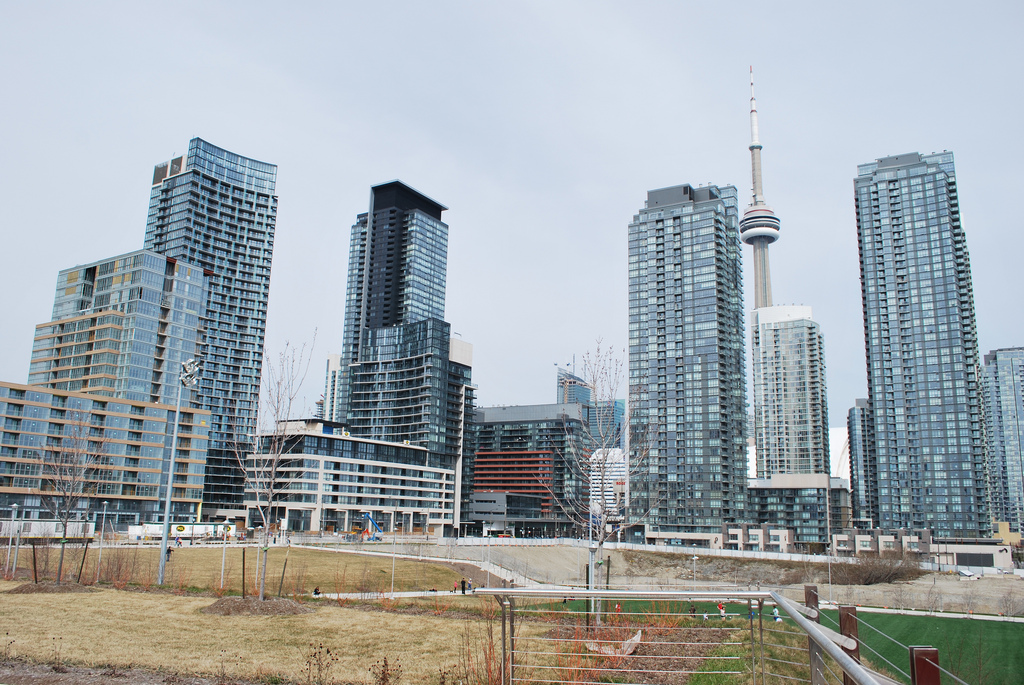
CityPlace from Canoe Landing Park, Toronto. Photograph by HBW 40 · CC BY 3.0.

Every landlord wants top dollar. I get it. You’ve invested in the unit, you’re carrying a mortgage, maintenance fees and taxes, and you’ve seen a neighbour’s listing at a number that looks great. So you list a little high, thinking, “I can always come down.”
Here’s what I tell every landlord I work with: an overpriced rental doesn’t just lease slower. It leases to the wrong person, for less money over time, and often ends at the market price anyway, after you’ve already paid for weeks of vacancy. Let’s break down why.
1. Vacancy is the most expensive line on your statement
An empty unit earns nothing, but your costs keep running. Maintenance fees, mortgage, property tax and insurance don’t pause while you wait for the “right” offer.
Let’s use real numbers. Say the market value of your condo is $2,600/month, and you list it at $2,800 instead.
- At $2,600, a unit earns about $85 a day.
- If the higher price costs you just four extra weeks of vacancy, that’s roughly $2,400 gone.
- The $200/month premium you were hoping for adds up to… $2,400 over a full year.
In other words, lose one month and you’ve already given away the entire year’s premium, and that’s assuming you eventually get the $2,800. Most of the time, an overpriced unit ends up leasing at or near market value after a price drop or two. You don’t get the premium; you just get the vacancy.
And timing matters more than most landlords realize. A new listing gets its strongest wave of interest in its first one to two weeks, because rental sites push fresh listings to the top. Once that window passes, your listing slides down the page and becomes “the one that’s been sitting there.”
2. Overpriced listings attract the applicants you least want
This is the part landlords rarely see coming.
Well-qualified renters (strong credit, stable income, good references) don’t wait around. They get approved quickly, usually on the first or second place they apply for. They are rarely the ones still searching after a month.
So who notices a listing that’s been sitting at an above-market price for weeks? Often it’s applicants who have been turned down elsewhere. They see a stale listing and assume the landlord is getting nervous and might be willing to overlook weak credit, thin income or a rocky rental history just to fill the unit.
That’s a dangerous place to be. A landlord who has been bleeding vacancy for six weeks is under pressure to say yes, and a tenancy that starts with a compromised application is far more likely to end in late or missed payments. In Ontario, getting from missed rent to a resolution can take months, and that costs far more than the premium you were chasing.
3. Strong tenants know their worth, and they shop for value
The best applicants know exactly how strong they are. They’ve done the research, they’ve compared listings, and they know they’ll be approved almost anywhere. That gives them leverage, and they use it to find the best value, not the most expensive unit.
If you want the tenant with the 780 credit score and the stable job, your listing needs to look like a smart choice next to everything else in the building and the neighbourhood. Overpricing removes you from their shortlist before they ever book a showing.
This matters even more right now. Toronto renters have had more choice over the past two years than they’ve had in a long time. Vacancy in newer GTHA rental buildings rose to 5.4% in early 2026, and condo landlords have been competing with purpose-built buildings offering incentives like free months of rent. Rents have started to firm up again this fall, but well-qualified tenants still have plenty of options, and they know it.
4. A fair price keeps good tenants longer, and that’s where the real money is
When a tenant feels they’re paying fair market rent, or that they got a bit of a deal, they tend to stay. They renew. They treat the place like home.
When a tenant feels they overpaid, they start looking around as soon as their lease is up.
Every turnover costs you:
- Leasing fees to find the next tenant
- Vacancy between tenancies
- Cleaning, painting and repairs to get the unit market-ready
- Risk: every new tenant is a new unknown
A tenant who stays three years instead of one can easily be worth thousands more to you than squeezing an extra $100 or $200 a month out of the first lease. Long-term, the landlord who prices right usually takes home more money than the landlord who priced high.
5. The market sets the price, not the listing
This is the simple truth: rentals lease for what the market says they’re worth. Renters search by price range, and they compare your unit against every similar unit in the building, the neighbourhood and their budget. If yours is overpriced, they won’t negotiate with you. They’ll simply choose another unit, and yours will keep sitting.
You can’t push the market up by asking for more. You can only decide whether you lease at market value now, or at market value later, after paying for the vacancy.
How to read the market’s feedback: the two-week rule
There’s no official formula, but agents and experienced landlords on both the rental and sales side use a common rule of thumb: the first two weeks tell you almost everything. That’s when your listing has the most visibility, so the response you get in that window is your best data.
Here’s how I read the three most common scenarios:
| What’s happening after 2 weeks | What it usually means | What to do |
|---|---|---|
| Zero (or nearly zero) showings | It’s the price. Renters are filtering you out by price range before they ever see the unit. | Reduce to the next price bracket renters search in. |
| A few showings, no applications | You’re on the edge. Renters are viewing your unit as a comparison and choosing better value elsewhere. | Check what similar units actually leased for, not just what’s listed, and adjust to match. |
| Lots of showings, no applications | The price gets people in the door, but something at the showing changes their mind. | Look at condition and presentation before cutting the price. |
When it’s not the price: condition
If you’re getting plenty of showings but no applications, the listing is doing its job. Renters like what they see online and the price fits their budget. The problem is usually what they see in person:
- The unit isn’t clean, or there’s an odor
- Worn flooring, scuffed walls or outdated fixtures that the photos didn’t show
- A current tenant’s clutter making the space feel small
- Repairs that are obviously needed
In this case, a price reduction may not fix anything. A deep clean, a fresh coat of paint or a few small repairs often will.
When it’s definitely the price
On the other hand, if your listing has professional photos, a floorplan and a well-written description, and it’s still getting little or no interest, there’s nothing left to blame but the price. Marketing gets your listing seen. If renters are seeing it and still not booking showings, they’ve already compared it and decided it’s not the best value for their money.
The longer you wait to adjust, the worse it gets. A listing with a lot of days on the market signals to renters that something is wrong, and it invites lower offers and weaker applicants.
The bottom line
Pricing your rental right isn’t leaving money on the table. It’s how you:
- Lease faster and cut your vacancy costs
- Attract the strongest applicants instead of the most desperate ones
- Keep good tenants longer and avoid repeated turnover costs
- Make more money over the life of your investment
If you’re getting ready to lease your unit, or your listing has been sitting longer than you expected, I’m happy to pull the recent leased comparables for your building and give you an honest read on where it should be priced.
Ivana Novak, Toronto Realtor ivananovak.ca · info@ivananovak.ca · 647-219-7205.