Toronto, understood locally
Find the part of Toronto that fits the way you want to live.
Thoughtful neighbourhood guides for buyers, sellers, renters and investors who need more than a list of amenities. Start with daily life, then connect it to the property, the street and the market.
A different kind of neighbourhood research
A postal code does not tell you how a place lives.
Toronto is a city of micro-locations. Two homes a few blocks apart can offer a different commute, school boundary, housing type, level of street activity and resale audience.
These guides are designed to make those differences useful. I look at the neighbourhood through a real estate lens—how daily life and property fundamentals meet—then help you test the fit against current listings, recent sales and the trade-offs that matter to you.
“The map is the starting point. The decision happens at street level.”
Ivana Novak Sales Representative · property.ca
02 / Explore by the life you want
Begin with priorities. Then let the map get specific.
These are not rankings. They are practical starting points for narrowing a large city into a short list worth walking, touring and comparing.
Walkable city life
Downtown, waterfront and mixed-use communities where the quality of the block and building matters as much as the address.
Character streets
Established west- and east-end pockets with distinct housing stock, local retail and strong street-by-street variation.
More room to live
Residential communities where lot, parking, renovation history, schools and commute shape the value conversation.
Parks and ravines
Neighbourhoods organized around Toronto’s ravine system, mature canopy and access to everyday outdoor space.
Subway-connected
Areas where reliable access to rapid transit changes both daily life and the buyer pool for resale.
Investment context
Neighbourhoods assessed through building quality, tenant demand, carrying costs, competing supply and long-term plans.
03 / The five-minute test
A short walk can change the value story.
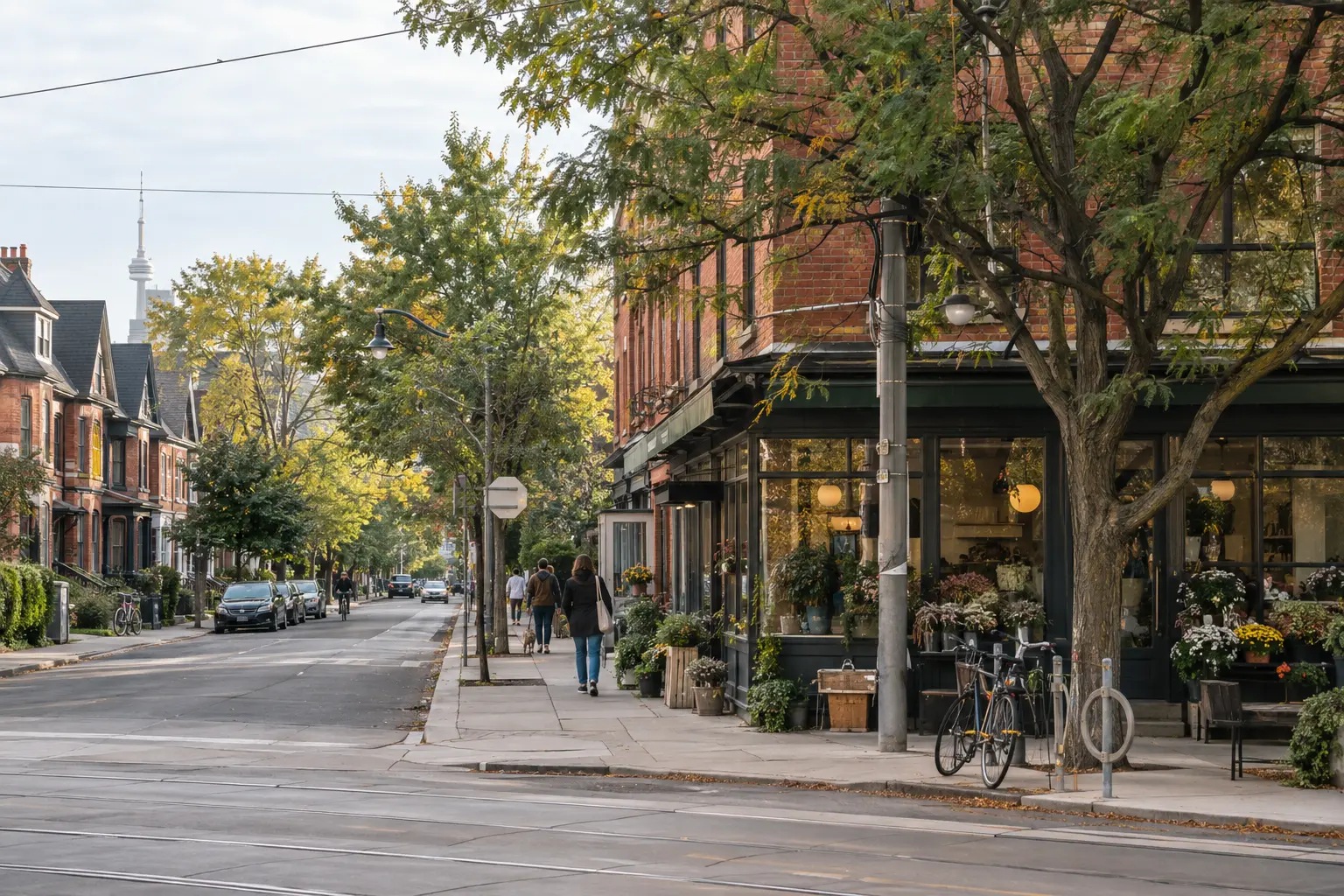
Toronto buyers do not purchase a neighbourhood average. They purchase one property in one micro-location. A useful comparison looks closely at what changes between the front door and the places you will use every week.
04 / One city, many markets
Toronto’s districts organize the search. Local evidence makes the decision.
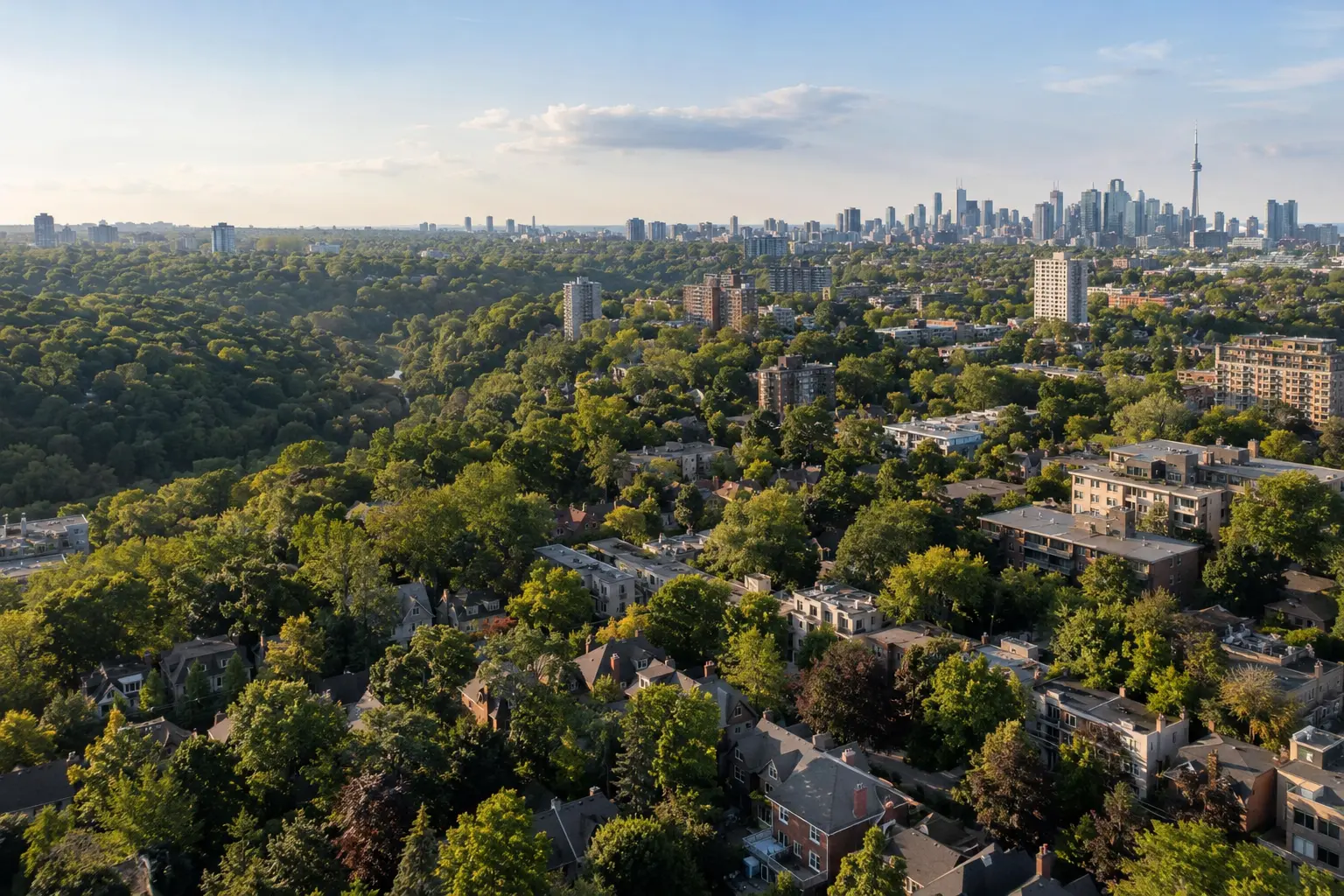
The complete neighbourhood directory is the navigational backbone for every C01–C15 district and its communities. This editorial hub adds the layer buyers and sellers need before they act: housing context, day-to-day character and questions worth investigating.
05 / Built for better decisions
What a serious Toronto neighbourhood guide should tell you.
Every future guide will follow a consistent research structure, while leaving room for what makes the local market genuinely different.
Housing, properly separated
Condominiums, co-ownerships, townhomes, semis and detached homes should not be blended into one easy average.
The daily-life test
Transit, groceries, parks, schools, restaurants, noise and street activity reveal how an area actually works.
Micro-location evidence
The strongest comparison is specific to the building, housing type, street, condition and immediate competing supply.
What is changing
Planning applications, new transit, construction and neighbouring sites can affect access, light, views and future appeal.
A decision, not a ranking
The right neighbourhood is the one that supports your priorities at a price and property condition you can live with.
06 / Read the market from your side
The same neighbourhood means something different depending on the decision.
Match daily life to property fundamentals.
Build a short list, understand trade-offs and compare homes using relevant local evidence.
Buyer guidance →SellingPosition the home inside its real competitive set.
Identify the buyers most likely to respond and the neighbourhood story that supports value.
Seller guidance →Relocating or investingTurn a large city into a disciplined search.
Connect location, carrying costs, rental context and long-term plans before touring begins.
Start a conversation →07 / Local questions
Before you choose a Toronto neighbourhood.
No guide replaces walking the streets or reviewing the current property-level evidence. These answers establish the right starting point.
01How do I choose the right Toronto neighbourhood?
Begin with the routines that shape daily life: commute, transit, housing type, budget, schools where relevant, green space, street activity and the amount of change you are comfortable with. Then compare actual properties and recent local evidence within the specific pockets that meet those priorities.
02Why can Toronto home values change from one street to the next?
Housing type, lot and unit characteristics, school boundaries, transit access, traffic, ravines, views, parking, planned development and even the side of the street can influence demand. Broad neighbourhood averages are useful context, but they do not replace property-level comparables.
03What should a Toronto neighbourhood guide include?
A useful guide should cover housing stock, condominium and freehold patterns, transit, parks, schools and boundaries, shopping, everyday services, development activity and current real estate context. It should also explain where conditions vary within the neighbourhood.
04Are Toronto neighbourhood boundaries official?
Some boundaries come from City of Toronto planning areas, while real estate districts, local business areas and commonly used neighbourhood names may overlap or differ. A guide should state the geography being discussed instead of treating every label as exact.
05Can you help me compare two or three Toronto neighbourhoods?
Yes. A useful comparison connects your budget and property type to daily life, recent sales, active competition, likely trade-offs and future plans. The goal is not to name a universally best neighbourhood, but to identify the strongest fit for your decision.
06Where can I browse every Toronto C district and neighbourhood?
Use the complete Toronto neighbourhood directory to browse the C01–C15 districts and their local communities. Individual editorial guides will be connected to that master index as they are published.
Your Toronto short list
Let’s find the neighbourhood that fits the decision—not just the search filters.
Bring your budget, timing, commute, property type and the parts of daily life you do not want to compromise. I will help you turn them into a focused Toronto search.
Plan your neighbourhood search↗Call 647-219-7205 →