The Toronto relocation guide
A new city is more than an address.
It is a new way of living.
A practical field guide for moving to Toronto or across the GTA—with neighbourhood, housing, timing and logistics considered as one complete decision.
Local context, before urgency
The right move begins with the life the address needs to support.
Toronto is a city of micro-markets. Two homes a short distance apart can offer a very different commute, school path, street rhythm, carrying cost and future resale audience.
I help you translate the city into practical choices: where your days will work, what your budget can comfortably support and how to make the move without allowing logistics to drive the real estate decision.
“We do not start with listings. We start with the shape of your week.”
Ivana Novak Sales Representative · property.ca
01 / Define the right fit
Your shortlist should begin with daily life.
A neighbourhood name is only the beginning. The useful questions are specific.
Commute
Office location, hybrid schedule, transit route, driving time and the cost of parking.
Housing
Condo, townhouse, semi or detached; interior space, outdoor space and maintenance expectations.
Budget
Purchase or rent, monthly carrying costs, deposits, taxes, utilities and a sensible reserve.
Schools
Address-specific boundaries, programs, childcare, transportation and registration timing.
Daily rhythm
Walkability, groceries, parks, restaurants, quiet, nightlife and weekend habits.
Future plans
Length of stay, growing household, mobility, resale audience and flexibility for the next move.
02 / Read the city at street level
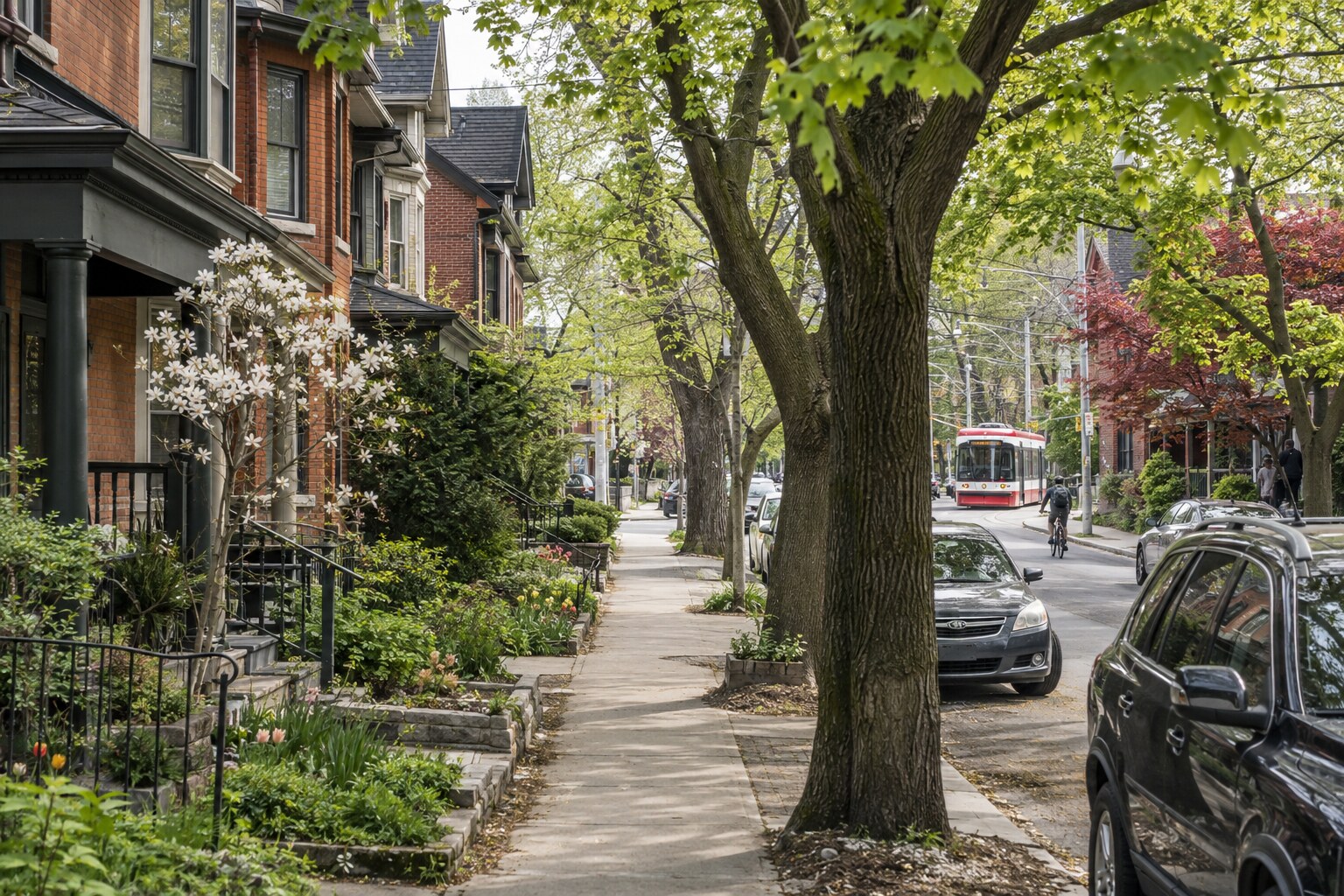
In Toronto, five minutes can change the whole experience.
Neighbourhood research should move beyond reputation. Visit at the times you will actually use the area and compare the exact pocket, route, building or street.
03 / The relocation roadmap
From first conversation to feeling at home.
Orient
Clarify why you are moving, arrival date, work locations, household needs and the unknowns.
Prepare
Organize financing or rental documents, identification, funds, professional advice and a realistic budget.
Shortlist
Translate priorities into neighbourhoods and property types worth investigating.
Tour
Use a focused in-person or virtual plan to compare streets, buildings, homes and daily routes.
Secure
Structure the purchase or lease with the terms, due diligence and timing explained clearly.
Coordinate
Connect movers, insurance, utilities, lawyer or lender, current home, storage and travel.
Arrive
Complete final visits, keys, inventory checks and the immediate setup needed for day one.
Settle
Learn the neighbourhood, update records and review the home after the first weeks of living in it.
04 / Choose the housing path
Rent first, buy now or create a staged transition.
Rent first
Useful when you want to learn the city first, have a short assignment, need speed or are not ready to commit to one pocket.
Consider moving twice, lease timing, tenant documents and the cost of delaying a purchase.Buy on arrival
Useful when financing, timing, location and property requirements are sufficiently clear to make a durable decision.
Build in due diligence, an inspection strategy and a plan for remote or compressed decision-making.Sell and buy
Useful when the move depends on equity, closing dates and the market response to your current home.
Compare selling first, buying first, bridge-financing discussions and temporary accommodation.The appropriate path depends on your finances, residency, tax, legal and housing circumstances. Confirm personal decisions with qualified professionals.
05 / Understand the housing landscape
Property type changes both the search and the ownership experience.
Toronto’s housing is varied, and the trade-offs are often hyper-local. We compare the full package rather than square footage alone.
Build your shortlist ↗Building quality, fees, status certificate, rules, parking, locker, transit and the suite’s light and outlook.
Condition, systems, lot, parking, maintenance, renovation history and how the street affects value.
Ownership structure, shared elements, fees, exterior responsibility, visitor parking and layout.
Lease terms, inclusions, utility responsibilities, building management, documents and move-in rules.
06 / Make moving day the easy part
A calm arrival is planned backward from the keys.
Once housing is secured, the real estate dates become anchors for the rest of the move. Build a single calendar and give every professional the same information.
- Closing or lease commencement and key pickup
- Movers, elevators, loading areas and parking permits
- Insurance, utilities and internet activation
- Travel, temporary accommodation and storage
- Final visit, condition review and measurements
- Address changes, records, licences and services

07 / Relocation is not one-size-fits-all
The plan changes with where you are coming from.
Different moves introduce different timelines, advisers and documentation.
Across Toronto or the GTA
Coordinate current housing, school or work continuity, bridge timing, showings and a move that may happen between nearby micro-markets.
From another province
Translate local market language, property types, taxes and closing customs; connect financing and legal work early.
From outside Canada
Address immigration, residency, tax, financing, identification and foreign-buyer questions with qualified advisers before relying on a housing plan.
Employer-supported move
Align the search and transaction with benefit limits, approved providers, reporting requirements and the assignment timeline.
08 / Start with official sources
Verify important details where the rules are maintained.
Transit, school boundaries, immigration programs, municipal services and housing rules can change. Use current official information and obtain personal legal, tax, immigration and financial advice where needed.
09 / Toronto relocation questions
Answers for the decisions that arrive before the boxes.
This guide is general real estate information, not legal, immigration, tax, financial or school-placement advice.
01How early should I begin planning a move to Toronto?
Begin with the housing, employment and timing questions as early as practical. A local orientation can start remotely, followed by financing or rental-document preparation, neighbourhood research and a focused visit. The right lead time depends on whether you are renting, buying and selling at the same time, or moving internationally.
02Should I rent before buying in Toronto?
Renting first can provide flexibility and first-hand neighbourhood knowledge. Buying immediately can make sense when your timing, financing and location requirements are clear. The better option depends on the length of your stay, transaction costs, available inventory and tolerance for moving twice.
03Which Toronto neighbourhood is best for a newcomer?
There is no universal best neighbourhood. The right fit depends on commute, budget, property type, school needs, walkability, transit, parking, green space and the kind of daily rhythm you want. Compare specific pockets rather than relying only on broad district names.
04Can I buy a Toronto home before arriving in Canada or Ontario?
Remote preparation, virtual tours and electronic signing can support parts of a purchase, but financing, tax, residency, identification and legal requirements need early professional review. Build the team before making an offer and arrange an in-person or trusted local inspection strategy.
05How do I coordinate selling one home and buying another?
The plan should connect sale timing, financing, deposits, conditions, bridge-financing discussions, closing dates, temporary accommodation and moving logistics. There is no risk-free sequence, so compare the consequences of buying first, selling first or using a flexible interim option.
06What costs should I budget for when relocating to Toronto?
Beyond the purchase or rent, consider deposits, land-transfer taxes where applicable, legal and financing costs, movers, insurance, utility setup, storage, travel, temporary accommodation, parking and immediate household needs. Confirm personal figures with qualified professionals.
07How should families research Toronto schools?
Start with official school-board tools and verify the address-specific catchment, program availability, transportation, registration and eligibility directly with the board. Boundaries and programs can change, and proximity does not guarantee attendance.
08Can you help if I am relocating for work?
Yes. A useful relocation plan can include a remote consultation, neighbourhood shortlist, market orientation, focused tour schedule, purchase or lease representation and coordination with your employer’s relocation provider or other advisers where appropriate.
Your first local conversation
Let’s turn a big Toronto move into a sequence of clear decisions.
Tell me where you are coming from, what is bringing you here and what daily life needs to look like. We will build the housing plan from there.
Plan your relocation ↗Call 647-219-7205 →