The Toronto real estate investment guide
Do not buy the story.
Underwrite the property.
A practical framework for evaluating Toronto residential real estate through income, expenses, condition, tenancy, financing and exit—not optimism alone.
Evidence before excitement
A property can be attractive without being a sound investment.
Toronto real estate is not one market and an investment is not one number. Rent, vacancy, expenses, financing, condition, tenancy and future resale demand all affect the outcome.
I help investors compare the property to its real competition, investigate the details that influence risk and build a negotiation around supportable evidence. The objective is not to manufacture a “deal.” It is to understand what you are buying.
“A useful analysis still works when the assumptions become less comfortable.”
Ivana Novak Sales Representative · property.ca
01 / Define the investment thesis
Know what the property must do before you search.
A clear strategy keeps a beautiful kitchen from replacing the analysis.
Objective
Income, long-term appreciation potential, owner occupancy, redevelopment or portfolio diversification.
Time horizon
Expected hold, liquidity needs, refinancing assumptions and the conditions that would trigger a sale.
Tenant audience
Who is likely to rent here, why they choose the location and what comparable units compete for them.
Risk capacity
Vacancy, repairs, rate changes, capital projects, regulatory obligations and negative monthly cash flow.
Operating model
Self-management or professional management; furnished, conventional or multi-unit strategy where lawful.
Exit audience
Future investor and end-user demand, property flexibility and the costs involved in selling.
02 / Build the conservative model
Start with the income. Respect every expense.
Use actual leases and credible comparable evidence—not the highest advertised rent.
Even strong rental markets require room for turnover, leasing and non-payment risk.
Calculate before financing costs so properties can be compared on an operating basis.
Test the result under more than one interest-rate, expense and vacancy scenario.
These are general analytical concepts, not tax, accounting, appraisal or financial advice. Calculation methods differ. Have your assumptions and personal position reviewed by qualified professionals.
03 / Demand is local
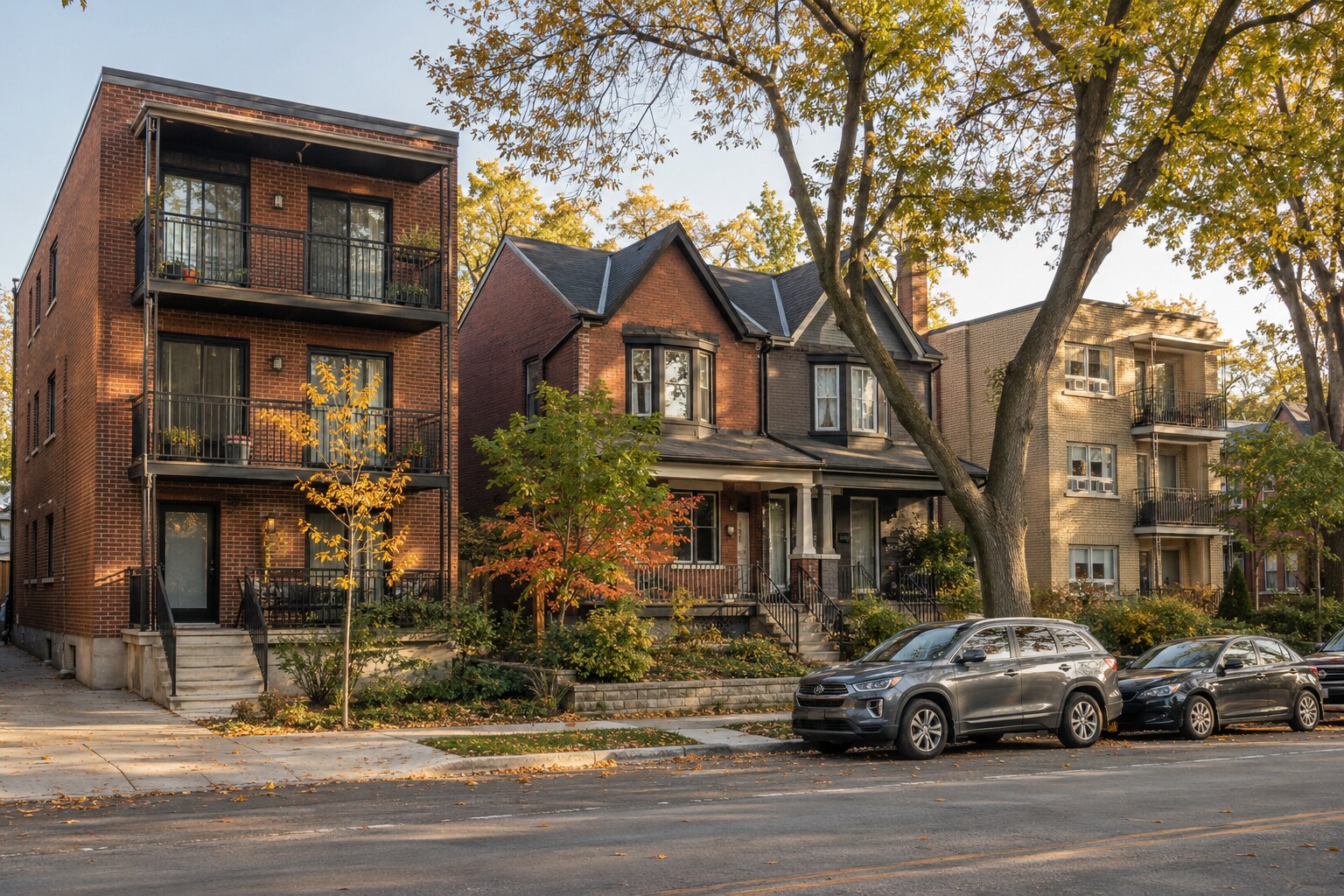
The tenant market begins outside the front door.
Strong rental demand is property- and pocket-specific. Study why a tenant would choose this home, what alternatives exist and what could change during the hold.
04 / Match the property to the strategy
Different assets carry different work.
Condominium
Review corporation finances, reserve fund, status certificate, fees, rental rules, competing units, assessments, parking and building-specific resale history.
Freehold house
Consider condition, systems, lot, parking, lawful use, maintenance, tenant utility responsibilities and future end-user appeal.
Duplex or multiplex
Verify lawful use, unit configuration, fire and building matters, services, leases, expenses and the operational complexity of several tenancies.
Tenanted property
Review leases, lawful rents, payment history, deposits, notices, maintenance, utility arrangements and the obligations that continue after closing.
05 / The investor roadmap
From strategy to operation.
Define
Set the objective, budget, hold period, operating model and risk limits.
Finance
Confirm qualification, equity, rental-income treatment, appraisal and reserve expectations.
Source
Search by strategy and numbers rather than property aesthetics alone.
Model
Build conservative income, expense, financing and capital-replacement scenarios.
Investigate
Review condition, lawful use, tenancy, title, documents, zoning and relevant market evidence.
Offer
Structure price, deposit, conditions, dates and document requests around the known risks.
Close
Coordinate lender, lawyer, insurer, accountant, inspection work, funds and possession.
Operate
Document the tenancy, maintain records and reserves, track performance and revisit the exit thesis.
06 / Due diligence
Verify the assumptions that hold the deal together.
A spreadsheet is only as reliable as the information behind it. Before becoming committed, identify what is known, what needs expert review and what remains uncertain.
- Leases, rent ledger and tenancy documents
- Lawful use, permits, zoning and unit configuration
- Structure, roof, water, electrical, plumbing and HVAC
- Insurance availability and lender requirements
- Taxes, utilities, fees, repairs and capital history
- Condominium or shared-property documents
- Title, easements, contracts and lawyer review

07 / Becoming a landlord
The operating responsibility begins after the closing.
Rental housing is both an asset and someone’s home. Build the plan around lawful, consistent and well-documented management.
Explore landlord guidance ↗Use legitimate, consistently applied criteria and understand Ontario human-rights requirements.
Use the required documentation, clarify inclusions and preserve a complete signed record.
Follow current rules for deposits, increases, receipts, notices and records.
Plan maintenance, entry, repairs, safety, insurance and emergency response.
Use a qualified paralegal or lawyer for tenancy issues requiring legal interpretation.
08 / Plan the exit before entry
A hold strategy needs more than one way to succeed.
Consider who may buy the property later and what condition, tenancy and market circumstances could affect that sale.
Sell as an investment
Future buyers may focus on legal income, expenses, tenancy, financing and the return supported by the property.
Sell to an occupant
Layout, condition, vacant-possession questions and the depth of owner-occupier demand can change the audience.
Retain and reposition
Future value and financing are not guaranteed. Qualification, appraisal, income and market conditions will be reassessed.
Hold or redeploy
Compare performance, future capital needs, taxes, transaction costs and opportunity—not appreciation alone.
09 / Current official resources
Check the rules where they are maintained.
Tax treatment, tenancy law, financing and municipal requirements change. Use official information and obtain advice for the property and ownership structure you are considering.
10 / Toronto investor questions
Clear answers before an opportunity feels urgent.
This guide is general real estate information, not investment, financial, mortgage, legal, tax, accounting, appraisal, engineering or property-management advice. Real estate can lose value and produce negative cash flow.
01What makes a good Toronto investment property?
A strong candidate should suit a defined strategy and tenant audience, have supportable income assumptions, manageable expenses and financing, appropriate physical and legal due diligence, and an exit path that does not depend on one optimistic outcome. Location matters, but the numbers and property details must work together.
02How do I estimate cash flow on a rental property?
Begin with supportable rent and other income, then deduct vacancy allowance and recurring operating costs such as property tax, insurance, condominium fees, utilities paid by the owner, maintenance, management and reserves. Financing payments are then considered separately. Use conservative assumptions and verify them with qualified advisers.
03Is a Toronto condominium a good investment?
A condominium can provide simpler exterior maintenance and access to high-demand locations, but fees, rental rules, corporation finances, reserve funding, competing supply and building-specific resale history matter. The suite and corporation should be evaluated together.
04Should I buy a tenanted property?
An existing tenancy can provide immediate income, but the lease, lawful rent, deposits, payment history, notices, maintenance issues and landlord obligations require careful review. Ontario tenancy law is fact-specific, so obtain legal advice when needed.
05What expenses do new investors commonly miss?
Commonly overlooked items include vacancy, leasing and management, repairs, capital replacements, utilities, insurance differences, bookkeeping, legal work, condominium assessments, financing costs and closing adjustments. Tax treatment and deductibility should be confirmed with an accountant.
06How much down payment is required for an investment property?
Requirements depend on occupancy, number of units, lender, borrower, property and the current financing program. A mortgage professional should confirm the required equity, qualification method, rental-income treatment, appraisal and reserve expectations before you rely on a purchase range.
07Can rental income increase over time?
It may, but lawful increases and turnover assumptions are governed by the tenancy and applicable Ontario rules. Do not underwrite a purchase on aggressive future rent growth. Model the existing legal income, realistic expenses and a conservative range of scenarios.
08Can you tell me whether a property is a good investment?
I can provide real estate market context, comparable activity, rental evidence, property information and transaction guidance. The final decision should also incorporate independent financing, tax, legal, inspection and, where appropriate, appraisal or planning advice.
Start with the thesis
Let’s evaluate the Toronto property—not sell you the dream.
Bring the strategy, the working budget and the questions. We will examine the market evidence, property details and transaction risks before deciding whether it deserves a closer look.
Discuss your investment search ↗Call 647-219-7205 →